
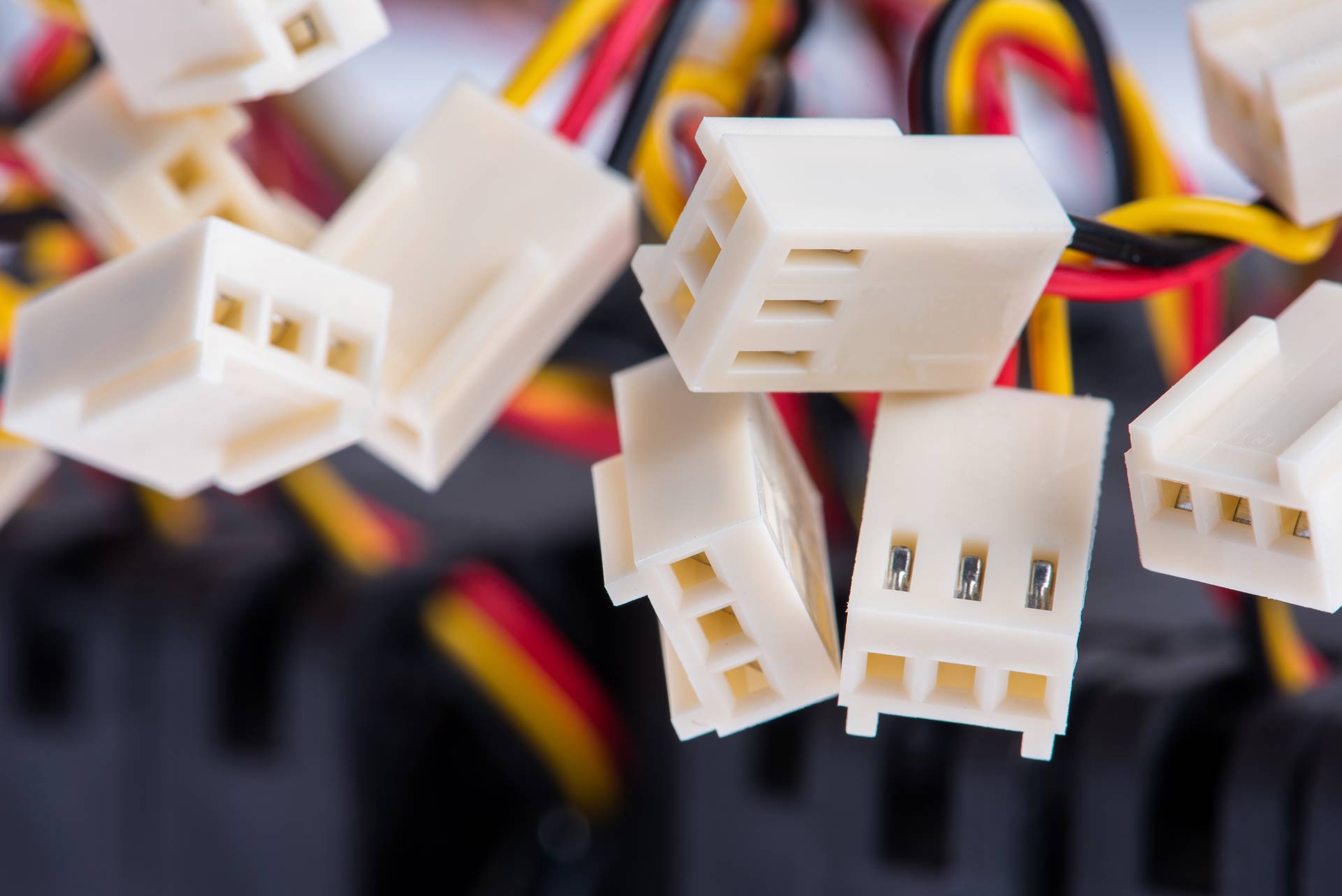
Pitch 2.54 mm [.100] connectors 254 series

The 254 Series connectors are a family of 2.54 mm (.100 inch) pitch connectors designed for reliable power and signal transmission in automotive, industrial, consumer electronics, and telecommunication applications.

Here’s a step-by-step breakdown of how we company typically produce these components:

The 254 Series connectors are a family of 2.54 mm (.100 inch) pitch connectors designed for reliable power and signal transmission in automotive, industrial, consumer electronics, and telecommunication applications. These connectors provide a balance between compact size and sufficient current-carrying capacity, making them a versatile choice for various interconnect solutions. 


  1. Key Features of 254 Series Connectors
  • Standard 2.54 mm (.100”) Pitch: Ensures compatibility with widely used PCB layouts and headers.
  • Versatile Configurations: Available in wire-to-wire, wire-to-board, and board-to-board configurations.
  • Current Rating: Typically supports up to 3A per circuit, depending on the terminal and wire gauge used.
  • Multiple Pin Options: Common configurations range from 2 to 40 positions in single- or dual-row layouts.
  • Secure Mating: Features friction locks or latch mechanisms to prevent accidental disconnection.
  • Polarized Design: Prevents incorrect mating and ensures proper alignment.
  • Durable Construction:
  • Housing: Made from PBT or Nylon 66, offering high-temperature resistance.
  • Contacts: Manufactured from phosphor bronze or brass with tin, gold, or silver plating for better conductivity and corrosion resistance.
  • Surface Mount & Through-Hole Options: Available in SMD (surface-mount) and THT (through-hole) PCB configurations.
  • IDC (Insulation Displacement) & Crimp Versions: Supports both IDC and crimp termination methods for quick and secure wiring.


  1. Manufacturing Process


  1. a) Contact Stamping & Plating
  • High-speed progressive stamping creates metal terminals from copper alloys.
  • Terminals undergo plating with tin, gold, or silver for enhanced conductivity and durability.


  1. b) Injection Molding (Connector Housing)
  • Thermoplastics like PBT, PA66, or LCP are injection-molded to form precise connector housings.
  • The molded parts are heat-resistant and dimensionally stable.


  1. c) Terminal Assembly & Wire Termination
  • Crimp-type connectors: Terminals are crimped onto wires using automated crimping machines.
  • IDC connectors: Wires are pressed into insulation displacement slots for fast assembly.
  • Board-mount versions: Terminals are inserted into housings and prepped for PCB soldering.


  1. d) Testing & Quality Control
  • Electrical Testing: Checks continuity, insulation resistance, and voltage ratings.
  • Mechanical Testing: Evaluates mating/unmating force, retention force, and durability.
  • Environmental Testing: Includes tests for thermal cycling, humidity, and vibration resistance.


  1. Applications of 254 Series Connectors
  • Automotive Electronics (e.g., sensors, lighting, infotainment systems)
  • Industrial Control Systems (e.g., PLCs, motor controllers, power distribution)
  • Consumer Electronics (e.g., printers, displays, home appliances)
  • Networking & Communication Equipment (e.g., routers, modems, telecom boards)
  • LED & Lighting Systems

Our Pitch 2.54 mm [.100] connectors 254 series

DIN plugs

DIN plugs are standardized electrical connectors originally developed by the Deutsches Institut für Normung (DIN), the German standards organization

ISO connectors for 2.8mm - 0.110

Our connectors are designed for reliable power and signal connections, ensuring secure and efficient interconnectivity in various systems

Pitch 5.0 mm. connectors - 0.197

connectors are power and signal connectors designed for wire-to-wire and wire-to-board applications